In 2026, when many Slovenian museums and institutions are dedicating their activities to exploring and presenting the work of architect Vlasto Kopač (1913–2006), MAO is exhibiting his project The Path Along the Wire. Over the decades and through social changes, the path has changed its name—originally the Path Along the Wire of Occupied Ljubljana, it later became the Path of Remembrance and Comradeship, then the Avenue of Remembrance and Comradeship, the Green Ring, and finally simply PATH. It is a monument to occupation and resistance. It is a monument, but not an object; rather, it is a space that enables a ritual of commemoration through walking. At the same time, it serves as a recreational area, a city park, and a sports infrastructure. The Path Along the Wire is an unfinished, constantly evolving project. It began as a cart track that followed the traces of wartime-occupied Ljubljana, along the route of the barbed-wire perimeter that, for 1,117 days, separated the city from ...

Ecological Perspectives in the MAO Collection, 1930–1979   The exhibition opening will be on Thursday, 18th December, at 7 PM.   The exhibition Is Nature Modern? explores modernistic architecture and design’s relationship to nature and their approach to ecological thinking. The exhibition takes as its starting point the collection of the Museum of Architecture and Design (MAO) and its extensive selection of projects, objects, and documentation from the fields of architecture, design, and photography of the 20th century.   The Modernist ideal of progress, anchored in notions of continuous economic growth and industrial production, has particularly defined this century in the Global North. This ideal has directly contributed significantly to the depletion of natural resources and global warming. Modernism seems to have drawn a sharp divide between nature and society: through intellect, technology, and planning, humankind placed itself above and outside nature, and ...

The photography exhibition The Future Belongs to the Young. is the result of a collaborative effort within Museum in the Community, a project developed by MAO together with residents and institutions of the Nove Fužine neighbourhood. During analogue photography workshops mentored by Matjaž Rušt and Robert Marin of The Most Beautiful City in the World, young participants explored every aspect of the photographic process, from the technical and conceptual to the selection of photographs for the exhibition.   Through the camera lens, participants observed their surroundings, capturing everyday moments and personal perspectives. The analogue approach played a key role, slowing down the process and fostering a more patient and thoughtful approach to creation. As the result is not immediately visible, attention shifts from the final product to the process itself – to observation, reflection, and experimentation. Photography thus becomes a tool for understanding space, personal ...

Actual Events

Loading…

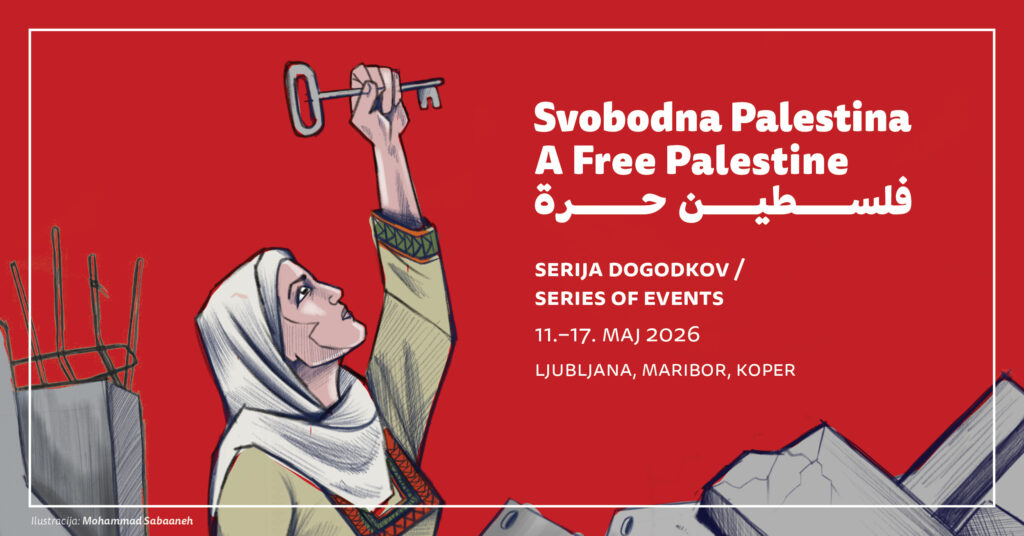
Free Palestine: Architecture of Resistance

Pogovor, Discussion / 15. 5. 2026 / 18:00

As Gaza remains in the grip of a severe humanitarian crisis and faces unprecedented destruction of its cultural and natural heritage, violence against the Palestinians continues to escalate along with the expansion of illegal settlements in the West Bank. The destruction of entire neighbourhoods, agricultural landscapes, public infrastructure and heritage is threatening to erase their communities, historical memory and centuries-old traditions.   The international public has seen increasingly heated debates emerging regarding the future and reconstruction of Gaza, including ideas of turning Gaza into a tourist backdrop or a luxury resort. Such proposals disregard the needs and rights of the local population and undermine the chances for a sustainable and just reconstruction rooted in the practices and collective efforts of the local communities.   In collaboration with Gibanje za pravice Palestincev (Movement for the Rights of Palestinians) and the Faculty of Humanities of ...

As Gaza remains in the grip of a severe humanitarian crisis and faces unprecedented destruction of its cultural and natural heritage, violence against the Palestinians continues to escalate along with the expansion of illegal settlements in the West Bank. The destruction of entire neighbourhoods, agricultural landscapes, public infrastructure and heritage is threatening to erase their communities, historical memory and centuries-old traditions.


The international public has seen increasingly heated debates emerging regarding the future and reconstruction of Gaza, including ideas of turning Gaza into a tourist backdrop or a luxury resort. Such proposals disregard the needs and rights of the local population and undermine the chances for a sustainable and just reconstruction rooted in the practices and collective efforts of the local communities.


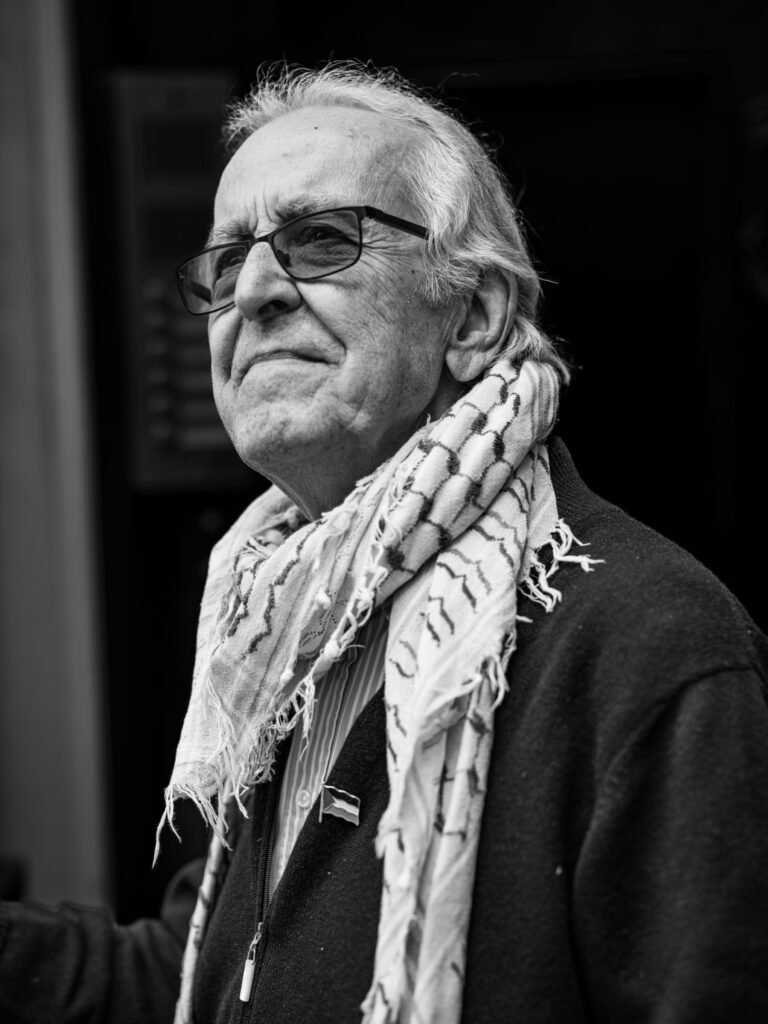
In collaboration with Gibanje za pravice Palestincev (Movement for the Rights of Palestinians) and the Faculty of Humanities of the University of Primorska, the Museum of Architecture is going to host a conversation with Palestinian-British architect Antoine Raffoul. Our focus will be on the future of Gaza, the role of space, architecture and heritage during and after the war, the role of international institutions and the need for their more active engagement in the protection and reconstruction of Gaza. Raffoul insists that any reconstruction process should bear in mind the local community and its understanding of space and history, as well as its future aspirations.


Our point of departure will be Raffoul’s vision for the reconstruction of Gaza, inspired by the understanding of Palestine as a space for everyone wishing to live in peace and his decades-long efforts for the reconstruction of Lifta, a village situated at the western entrance to Jerusalem. Still facing demolition, Lifta was added to the UNESCO tentative list in 2015, owing also to the efforts of Israeli architectural organisations, and included on the World Monuments Fund’s 2018 World Monuments Watch List three years later. The event features screening of Antoine Raffoul’s short animated film portrait of pre-1948 Lifta, which uses modern technologies to visualize life in the village as it could be.


The conversation aims to open up space for a broader discussion on the ways in which the rebuilding of Gaza can unfold not as just a technical matter, but a process that integrates social, cultural and historic dimensions of the space.


The conversation will be in English, and will be moderated by Dr. Neža Čebron Lipovec, Asst. Prof. at the Faculty of Humanities, UP.


The event is part of the Free Palestine programme, a series of events organized by Divja Misel institute and partners to mark the anniversary of the Nakba. It is open to everyone interested in learning more and participating in the discussion.


 —

Antoine Raffoul is a Palestinian British architect, born in 1941 in Nazareth, Palestine. In 1948, he was expelled together with ten members of his family from their home in Haifa, Palestine, by Zionist underground forces. The family then temporarily settled in Lebanon, from where they were never able to return, as the borders were soon closed. Their home in Haifa was demolished in the early 1970s.

He received his architectural degree from the University of Illinois, USA (1968), after which he began his career in New York City at Victor Gruen Associates under the auspices of the then young Cesar Pelli. In 1971, he moved to London, where he worked at Ahrends, Burton and Koralek, and later established his own private architectural practice, which he ran for more than 28 years.

During this time, he launched a campaign against the “architecture of erasure” in Palestine and called for the expulsion, from their professional institutions, of architects involved in the design and construction of illegal Jewish settlements in Historic Palestine in violation of International Law. He is a Chartered Member of The Royal Institute of British Architects (RIBA), London, and a member of ICOMOS (International Council on Monuments and Sites), CIAV (International Committee on Vernacular Architecture), and a Fellow of The Royal Geographical Society (RGS), London.

In his work, he combines architecture, the study of vernacular traditions, and political engagement. He focuses in particular on issues of cultural heritage, the Right of Return, and the so-called “architecture of erasure” in Palestine.

In 2007, he initiated efforts to preserve the deserted Palestinian village of Lifta, west of Jerusalem, which was later placed on UNESCO’s Tentative List and on the World Monuments Fund List. He is also the Founder of the platform “1948 Lest We Forget” and co-founder of the international “Architectural Competition for the Rebuilding of Destroyed Palestinian Villages.”

He is actively involved in current initiatives for the rebuilding of Gaza, advocating approaches based on the inclusion of local communities and principles of spatial justice. He lectures and publishes in the fields of architecture, politics, and cultural heritage, and is currently preparing a book about his travels through Andalucia, Morocco, and the Algerian Sahara.

Share

As Gaza remains in the grip of a severe humanitarian crisis and faces unprecedented destruction of its cultural and natural heritage, violence against the Palestinians continues to escalate along with the expansion of illegal settlements in the West Bank. The destruction of entire neighbourhoods, agricultural landscapes, public infrastructure and heritage is threatening to erase their communities, historical memory and centuries-old traditions.


The international public has seen increasingly heated debates emerging regarding the future and reconstruction of Gaza, including ideas of turning Gaza into a tourist backdrop or a luxury resort. Such proposals disregard the needs and rights of the local population and undermine the chances for a sustainable and just reconstruction rooted in the practices and collective efforts of the local communities.


In collaboration with Gibanje za pravice Palestincev (Movement for the Rights of Palestinians) and the Faculty of Humanities of the University of Primorska, the Museum of Architecture is going to host a conversation with Palestinian-British architect Antoine Raffoul. Our focus will be on the future of Gaza, the role of space, architecture and heritage during and after the war, the role of international institutions and the need for their more active engagement in the protection and reconstruction of Gaza. Raffoul insists that any reconstruction process should bear in mind the local community and its understanding of space and history, as well as its future aspirations.


Our point of departure will be Raffoul’s vision for the reconstruction of Gaza, inspired by the understanding of Palestine as a space for everyone wishing to live in peace and his decades-long efforts for the reconstruction of Lifta, a village situated at the western entrance to Jerusalem. Still facing demolition, Lifta was added to the UNESCO tentative list in 2015, owing also to the efforts of Israeli architectural organisations, and included on the World Monuments Fund’s 2018 World Monuments Watch List three years later. The event features screening of Antoine Raffoul’s short animated film portrait of pre-1948 Lifta, which uses modern technologies to visualize life in the village as it could be.


The conversation aims to open up space for a broader discussion on the ways in which the rebuilding of Gaza can unfold not as just a technical matter, but a process that integrates social, cultural and historic dimensions of the space.


The conversation will be in English, and will be moderated by Dr. Neža Čebron Lipovec, Asst. Prof. at the Faculty of Humanities, UP.


The event is part of the Free Palestine programme, a series of events organized by Divja Misel institute and partners to mark the anniversary of the Nakba. It is open to everyone interested in learning more and participating in the discussion.


 —

Antoine Raffoul is a Palestinian British architect, born in 1941 in Nazareth, Palestine. In 1948, he was expelled together with ten members of his family from their home in Haifa, Palestine, by Zionist underground forces. The family then temporarily settled in Lebanon, from where they were never able to return, as the borders were soon closed. Their home in Haifa was demolished in the early 1970s.

He received his architectural degree from the University of Illinois, USA (1968), after which he began his career in New York City at Victor Gruen Associates under the auspices of the then young Cesar Pelli. In 1971, he moved to London, where he worked at Ahrends, Burton and Koralek, and later established his own private architectural practice, which he ran for more than 28 years.

During this time, he launched a campaign against the “architecture of erasure” in Palestine and called for the expulsion, from their professional institutions, of architects involved in the design and construction of illegal Jewish settlements in Historic Palestine in violation of International Law. He is a Chartered Member of The Royal Institute of British Architects (RIBA), London, and a member of ICOMOS (International Council on Monuments and Sites), CIAV (International Committee on Vernacular Architecture), and a Fellow of The Royal Geographical Society (RGS), London.

In his work, he combines architecture, the study of vernacular traditions, and political engagement. He focuses in particular on issues of cultural heritage, the Right of Return, and the so-called “architecture of erasure” in Palestine.

In 2007, he initiated efforts to preserve the deserted Palestinian village of Lifta, west of Jerusalem, which was later placed on UNESCO’s Tentative List and on the World Monuments Fund List. He is also the Founder of the platform “1948 Lest We Forget” and co-founder of the international “Architectural Competition for the Rebuilding of Destroyed Palestinian Villages.”

He is actively involved in current initiatives for the rebuilding of Gaza, advocating approaches based on the inclusion of local communities and principles of spatial justice. He lectures and publishes in the fields of architecture, politics, and cultural heritage, and is currently preparing a book about his travels through Andalucia, Morocco, and the Algerian Sahara.
Share

Rendez-vous aux jardins: Explore, Create, Build

Workshop / 5. 6. 2026 / 10:00

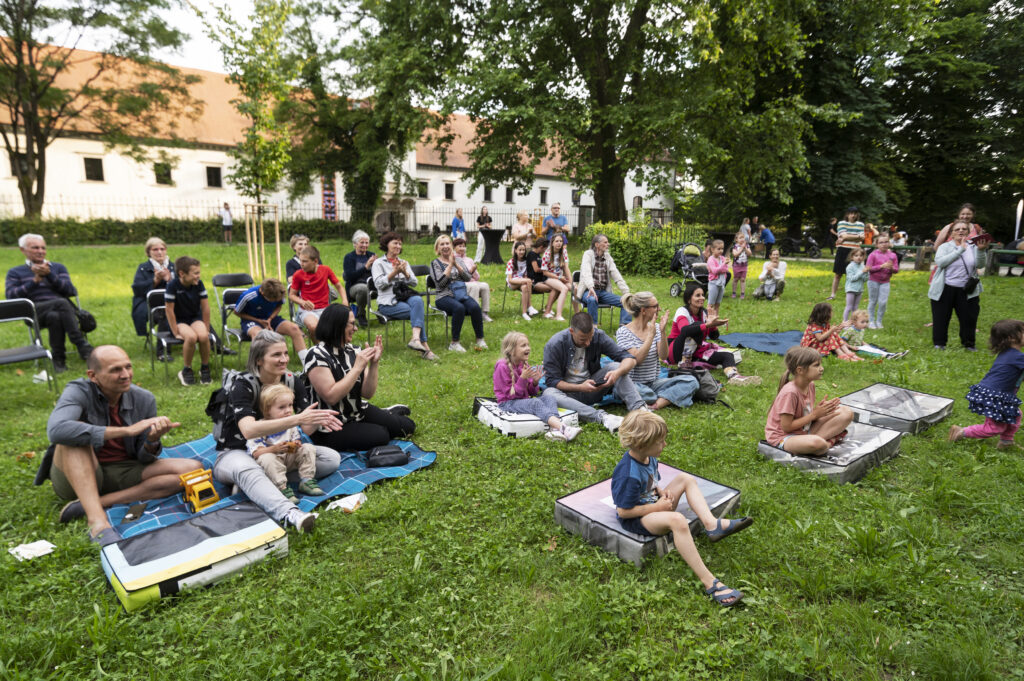
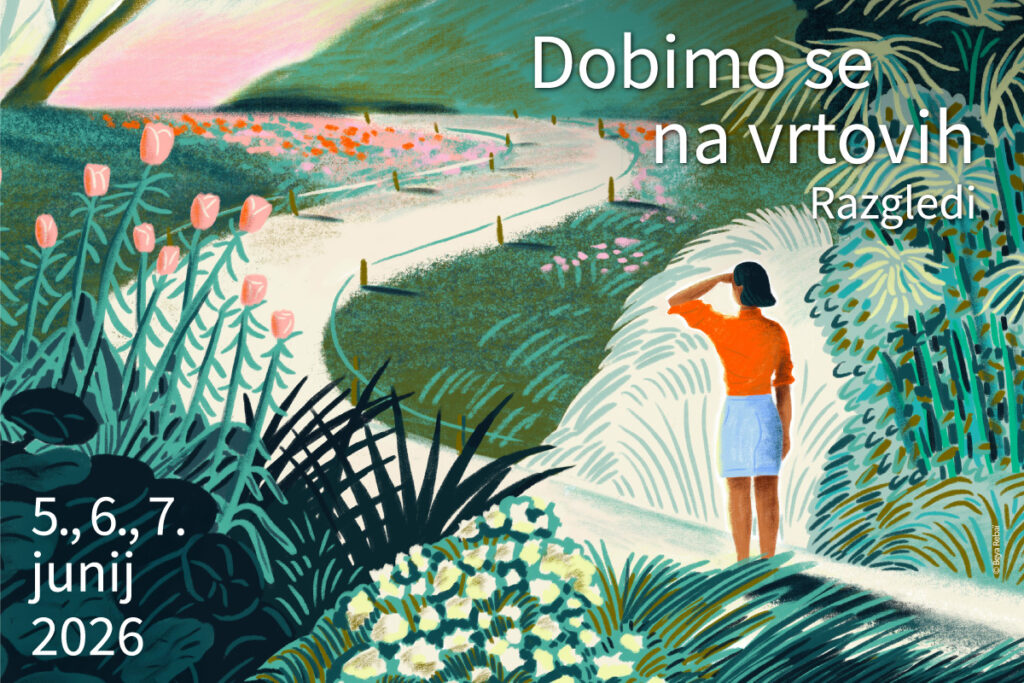
On the first weekend of June, as part of the European initiative Rendez-vous aux jardins (Meet Us in the Gardens), we invite you to visit parks and gardens in more than twenty European countries. This year’s theme is viewpoints. The initiative, which originated in France, aims to bring the diversity and richness of garden and park heritage closer to the public, highlight its cultural significance, and emphasize the positive impact of green spaces on people’s well-being.   Join us in the MAO park!   The park of the Renaissance Fužine Castle, home to the Museum of Architecture and Design, was arranged in the 19th century. It is characterized by old tree species such as plane trees and chestnuts, as well as landscaped paths along the river, creating a pleasant blend of natural and cultural environments.   At the event, we will explore different tree species, make leaf and bark prints, build a model of the park and the castle, and try out the role of landscape ...

On the first weekend of June, as part of the European initiative Rendez-vous aux jardins (Meet Us in the Gardens), we invite you to visit parks and gardens in more than twenty European countries. This year’s theme is viewpoints. The initiative, which originated in France, aims to bring the diversity and richness of garden and park heritage closer to the public, highlight its cultural significance, and emphasize the positive impact of green spaces on people’s well-being.


Join us in the MAO park!


The park of the Renaissance Fužine Castle, home to the Museum of Architecture and Design, was arranged in the 19th century. It is characterized by old tree species such as plane trees and chestnuts, as well as landscaped paths along the river, creating a pleasant blend of natural and cultural environments.


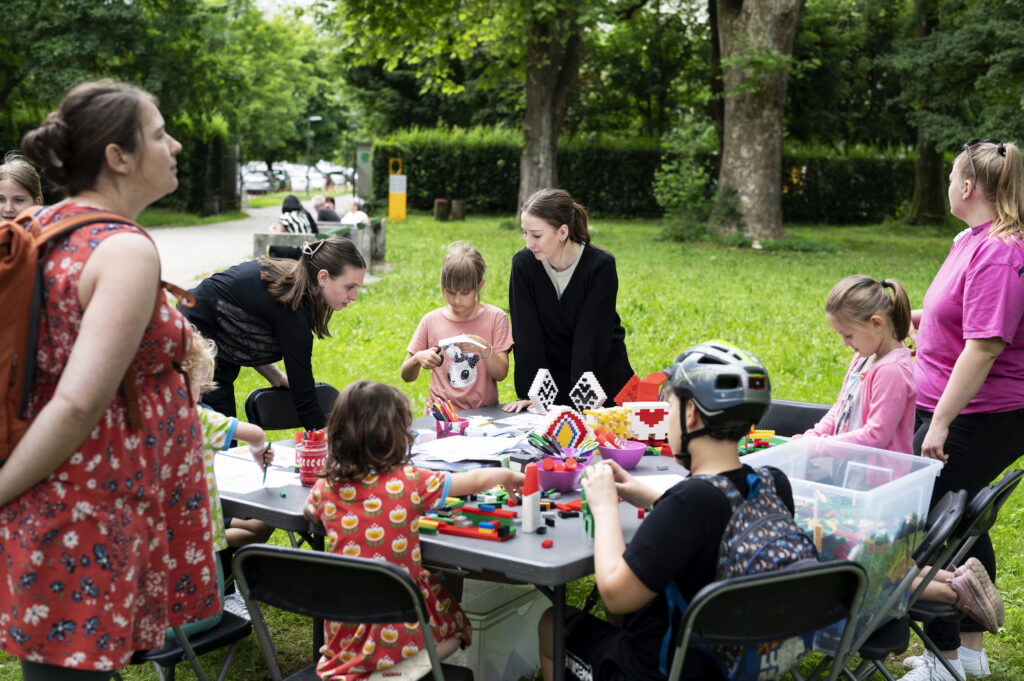
At the event, we will explore different tree species, make leaf and bark prints, build a model of the park and the castle, and try out the role of landscape architects. Along the way, we will also discover interesting architectural elements, including the original roof turret from the Provincial Mansion (now the seat of the University of Ljubljana), and visit a nature-based playground created as part of the Museum in the Community project. We will explore a hidden pond, learn about urban beekeeping and the importance of ecological corridors, and observe birds and other park inhabitants.


The event is intended for children and young people up to the age of 15.

Share

On the first weekend of June, as part of the European initiative Rendez-vous aux jardins (Meet Us in the Gardens), we invite you to visit parks and gardens in more than twenty European countries. This year’s theme is viewpoints. The initiative, which originated in France, aims to bring the diversity and richness of garden and park heritage closer to the public, highlight its cultural significance, and emphasize the positive impact of green spaces on people’s well-being.


Join us in the MAO park!


The park of the Renaissance Fužine Castle, home to the Museum of Architecture and Design, was arranged in the 19th century. It is characterized by old tree species such as plane trees and chestnuts, as well as landscaped paths along the river, creating a pleasant blend of natural and cultural environments.


At the event, we will explore different tree species, make leaf and bark prints, build a model of the park and the castle, and try out the role of landscape architects. Along the way, we will also discover interesting architectural elements, including the original roof turret from the Provincial Mansion (now the seat of the University of Ljubljana), and visit a nature-based playground created as part of the Museum in the Community project. We will explore a hidden pond, learn about urban beekeeping and the importance of ecological corridors, and observe birds and other park inhabitants.


The event is intended for children and young people up to the age of 15.

Share

Meet Us in the Gardens: MAO Castle Park

Vodstvo / 6. 6. 2026 / 11:00

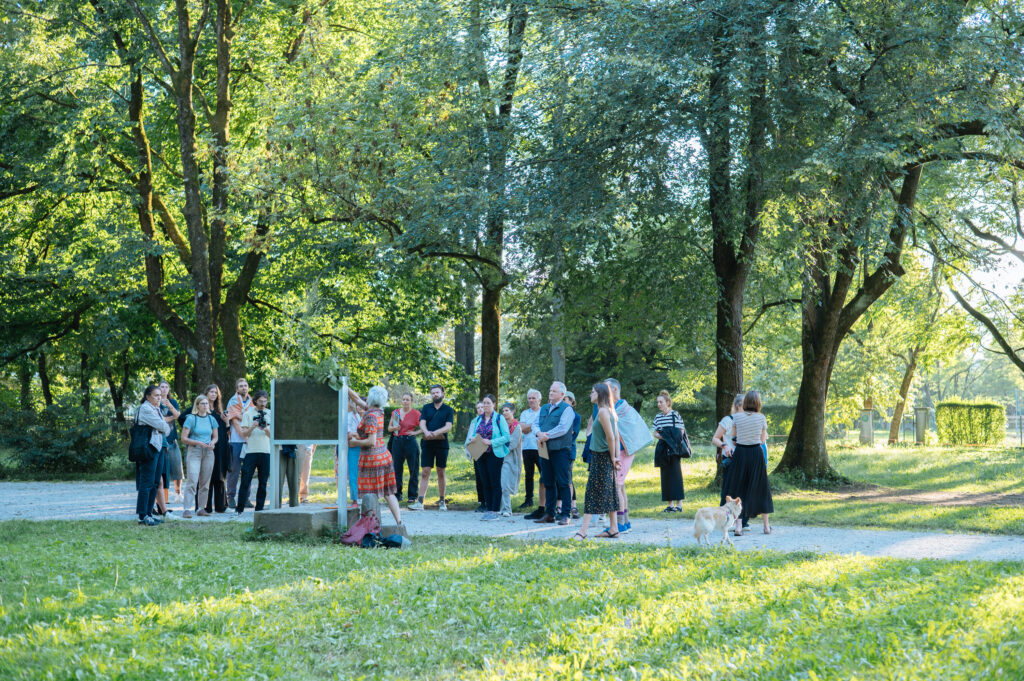
As part of the Rendez-vous aux jardins (Meet Us in the Gardens) initiative, when numerous gardens and parks across Europe open their doors to the public, we invite you to join a guided tour of the Fužine Castle park at MAO.   The Fužine Castle park represents an important example of the interplay between historical landscape design and contemporary urban space. It took on its present form in the 19th century, when Fidelis Terpinc, the then owner of the castle, transformed the grounds into a park. Plane trees, cypresses, carob trees, and other exotic trees and shrubs were planted. The park was renovated in the early 1990s. Today, it is a public space at the intersection of natural heritage, a riverside environment, and dense residential development. This layering raises a number of questions about its management, significance, and future development.   Through its historical context and transformations, the tour will present the park from the perspective of landscape ...

As part of the Rendez-vous aux jardins (Meet Us in the Gardens) initiative, when numerous gardens and parks across Europe open their doors to the public, we invite you to join a guided tour of the Fužine Castle park at MAO.


The Fužine Castle park represents an important example of the interplay between historical landscape design and contemporary urban space. It took on its present form in the 19th century, when Fidelis Terpinc, the then owner of the castle, transformed the grounds into a park. Plane trees, cypresses, carob trees, and other exotic trees and shrubs were planted. The park was renovated in the early 1990s. Today, it is a public space at the intersection of natural heritage, a riverside environment, and dense residential development. This layering raises a number of questions about its management, significance, and future development.


Through its historical context and transformations, the tour will present the park from the perspective of landscape architecture, spatial use, and contemporary environmental challenges. Special emphasis will be placed on biodiversity and sustainable management practices (such as mowing intensity, the role of urban beekeeping, and the identification and evaluation of wild-growing, including edible, plant species).


The guided tour will be conducted in collaboration with members of the Trajna association for the development of sustainable design.


Share

As part of the Rendez-vous aux jardins (Meet Us in the Gardens) initiative, when numerous gardens and parks across Europe open their doors to the public, we invite you to join a guided tour of the Fužine Castle park at MAO.


The Fužine Castle park represents an important example of the interplay between historical landscape design and contemporary urban space. It took on its present form in the 19th century, when Fidelis Terpinc, the then owner of the castle, transformed the grounds into a park. Plane trees, cypresses, carob trees, and other exotic trees and shrubs were planted. The park was renovated in the early 1990s. Today, it is a public space at the intersection of natural heritage, a riverside environment, and dense residential development. This layering raises a number of questions about its management, significance, and future development.


Through its historical context and transformations, the tour will present the park from the perspective of landscape architecture, spatial use, and contemporary environmental challenges. Special emphasis will be placed on biodiversity and sustainable management practices (such as mowing intensity, the role of urban beekeeping, and the identification and evaluation of wild-growing, including edible, plant species).


The guided tour will be conducted in collaboration with members of the Trajna association for the development of sustainable design.


Share
Loading…

Visit us and explore our current exhibitons or take a guided tour.

Skip to content